
A good air fryer is one that cooks food evenly, has controls you can understand in a few seconds, and has a basket or drawer that's easy to pull out and wash. Price matters less than whether the machine fits how you cook. Start there, and the rest gets easier.
Look at the basket or drawer first. A non-stick coating that's easy to wipe clean saves a lot of hassle over time. Check whether the basket is removable and whether it's dishwasher safe, since the maker's manual will say for sure. If you cook a lot of wet or saucy food, look for a model with a drawer that's easy to lift out without spilling. Some people also like a clear window so they can check on the food without opening the door, which means less heat escaping and fewer surprises.
Pay attention to the heating setup too. Fans that circulate hot air are what give the crispy result, so a model with a strong, even airflow tends to cook more evenly than one that heats from only one spot. You can't always tell from the box, so read reviews from people who cook the same kind of food you do. Look for notes about whether chips or chicken come out browned on all sides or only on top.
Think about safety features as well. Air fryers get very hot, so look for a cool-touch outer body, a stable base that won't slide on the counter, and an automatic shutoff. Keep the unit at least a few inches from walls and cabinets, and never put it on a towel or paper where the vent could blow onto it. Always let the basket cool before you empty it, since hot oil and steam can burn you.
Finally, check the warranty and the parts. Find out whether replacement baskets or trays are sold separately, and what the warranty period is. Those details come from the seller or the maker's paperwork, so confirm them before you buy.
Size and Capacity for Your Kitchen
Size is the first thing that trips people up. A tiny air fryer can feel perfect on a sample plate and then turn out to be a squeeze for a family dinner. A big one fills the counter and sits in the cupboard half the time. Before you compare models, measure the space you have and count how many people you usually cook for.
A rough rule many people use is to think in terms of what fits in one batch. Capacity in air fryers is often listed in litres, but that number doesn't tell you how much food actually fits. Two chicken breasts or a pile of wedges might fill one basket, while a whole chicken or a tray of roast vegetables may need a larger drawer or a model with a rack. Look for the listed capacity, then picture your usual meal going in before you buy.
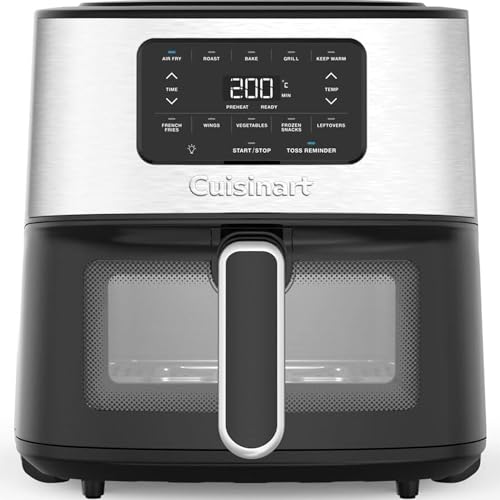
Cuisinart Compact 5.7L Air Fryer Single Drawer, Silver
A compact single drawer air fryer with five cooking functions and a generous 5.7 litre basket for family meals.
Product information
Our review: 4.2 out of 5
Product links
- One or two people, mostly sides and snacks: a smaller single-drawer model usually does the job and takes up less room.
- Family meals or batch cooking: a larger basket saves you from cooking in rounds, which can take a lot longer.
- Whole chickens or large joints: check whether the model includes a rotisserie or an oven-style interior, since these are built for bigger items.
- Two foods at once: a dual-basket machine lets you cook two things with different timings and temperatures, but it is wider and heavier than a single drawer.
Don't forget the height. Some air fryers have tall tops with a lid that lifts up, and you need clearance above them to open the drawer or lid. Under a wall cabinet, that can be a real problem. Measure from the counter to the underside of the cabinet and compare it with the product's listed height.
Last tip: a bigger machine needs more room around it for airflow. Leave clear space at the back and sides, and keep it away from curtains and tea towels. If your counter is cramped, a compact model you can slide to the back when not in use might suit you better than a large one that lives on the worktop.
Controls, Cleaning, and Everyday Use
Most air fryers have a handful of buttons or a small touchscreen, and the good ones make sense within a minute of looking at them. Start by checking for a clear display that shows the time and temperature at the same time. If you have to dig through menus to change the temperature, you'll get tired of it fast.
Presets are handy for beginners. Many models come with a set of programmes for things like fries, chicken, fish, or baked goods. They take the guesswork out of the first few meals. The catch is that presets are only a starting point, and the exact settings vary from one machine to the next. Once you learn how your model cooks, you'll likely shift the time or temperature yourself. Check the maker's manual or the cooking chart that came with it for the default settings it uses.

The Everyday Air Fryer Cookbook: 300+ Quick and Easy Recipes
A cookbook packed with air fryer recipes, from breakfast to dessert, with cook times and temperatures listed for each one.
Product information
Our review: 3.8 out of 5
Product links
Cleaning is where many people end up disappointed. A few easy habits will keep things simple:
- Let the unit cool fully before you pull anything out or wipe the inside.
- Empty crumbs and loose bits from the bottom of the drawer after each use, since they can burn and smell next time.
- Use a soft sponge and warm soapy water on the basket, and avoid steel wool, which can scratch a non-stick coating.
- Wipe the heating element area only when the machine is unplugged and completely cool, and use a dry or barely damp cloth.
Paper liners can cut down on mess, but they have a real hazard. Only use liners made for air fryers, and keep them weighed down by food so they don't lift into the heating element. Never let a liner cover the vent or block the airflow, and never run the machine empty with a liner in place. If a liner touches the heating element it can catch fire.
For everyday use, get into a routine. Preheat if the manual or recipe calls for it, shake or flip food partway through, and check doneness with a food thermometer rather than trusting the timer alone. Use tongs or a silicone-tipped tool to move hot food, and keep the cord out of the way of the hot outer body. Unplug the machine when you're done for the day, especially if your household includes curious kids or pets.
Pros
- Air fryers cook food with hot circulating air, so you can get a crispy result using little or no oil.
- Most models have a basket you pull out to check or shake your food partway through cooking.
- Many air fryers include preset cooking programs, which take some of the guesswork out of common foods like fries or chicken.
- Dual basket models let you cook two different foods at the same time, often at different settings.
- Non-stick liners can make cleanup quicker, since food is less likely to stick to the basket.
Cons
- Air fryers take up a lot of counter space, especially the big basket and oven-style models, so check your worktop before you buy.
- Cooking in batches is common with smaller baskets, which means waiting longer when you are feeding a crowd.
- Food can come out dry or unevenly crisped if you skip shaking the basket or turning the food partway through.
- Many models have non-stick coatings that can scratch over time if you use metal tools or scrub them hard, so the handy ones need gentle care.
- Cleaning the drawer and basket after greasy cooks can take a few minutes, and fat tends to collect around the heating element if you do not wipe it out regularly.
How to Choose the Right One for You
Start with the food you cook most often, not the fanciest feature on the box. If you mostly reheat leftovers and make frozen chips, a basic single-drawer model will probably cover you. If you want to roast, bake small cakes, or cook whole meals, look at oven-style units that offer more settings.
Before you shop, jot down a quick list so you don't get swayed by a shiny display:
- The three meals you make most, like wings, fish fillets, or fries
- How many people you usually feed on a normal night
- Whether it can live on the counter or has to go in a cupboard
- Your budget, plus a little wiggle room in case a better fit costs more
Next, check the power rating in the product details. Air fryers draw a lot of electricity while heating, so compare the listed wattage with your socket and any cable you plan to use. Plug it straight into a wall socket where you can. Avoid extension leads and multi-way adaptors, since they can overheat under a heavy load. If you're not sure your kitchen circuit can handle it, ask a qualified electrician before you plug it in.
Price is a useful guide, but it isn't the whole story. Cheaper models often handle the basics just fine. Pricier ones usually add extra cooking modes, larger baskets, or more presets. Ask yourself which of those extras you would actually use each week. If the honest answer is none, put that money toward a better size or a model with a clear display.
Last, look at what comes in the box and what you'll need to buy later. Some sellers include a few accessories, and others leave them out, so read the listing closely. If you're new to this style of cooking, a beginner-friendly cookbook can save you a lot of guessing about timings. The Pinch of Nom Air Fryer Light and Easy Cookbook is one example from our range, and it works alongside any machine you pick.

